
Eyewear design is moving between heritage and modernity. Retro-inspired shapes, slim metal frames, classic silhouettes and refined details are appearing across new collections.
When the eyewear itself carries a strong visual identity, the case should not feel disconnected from it.
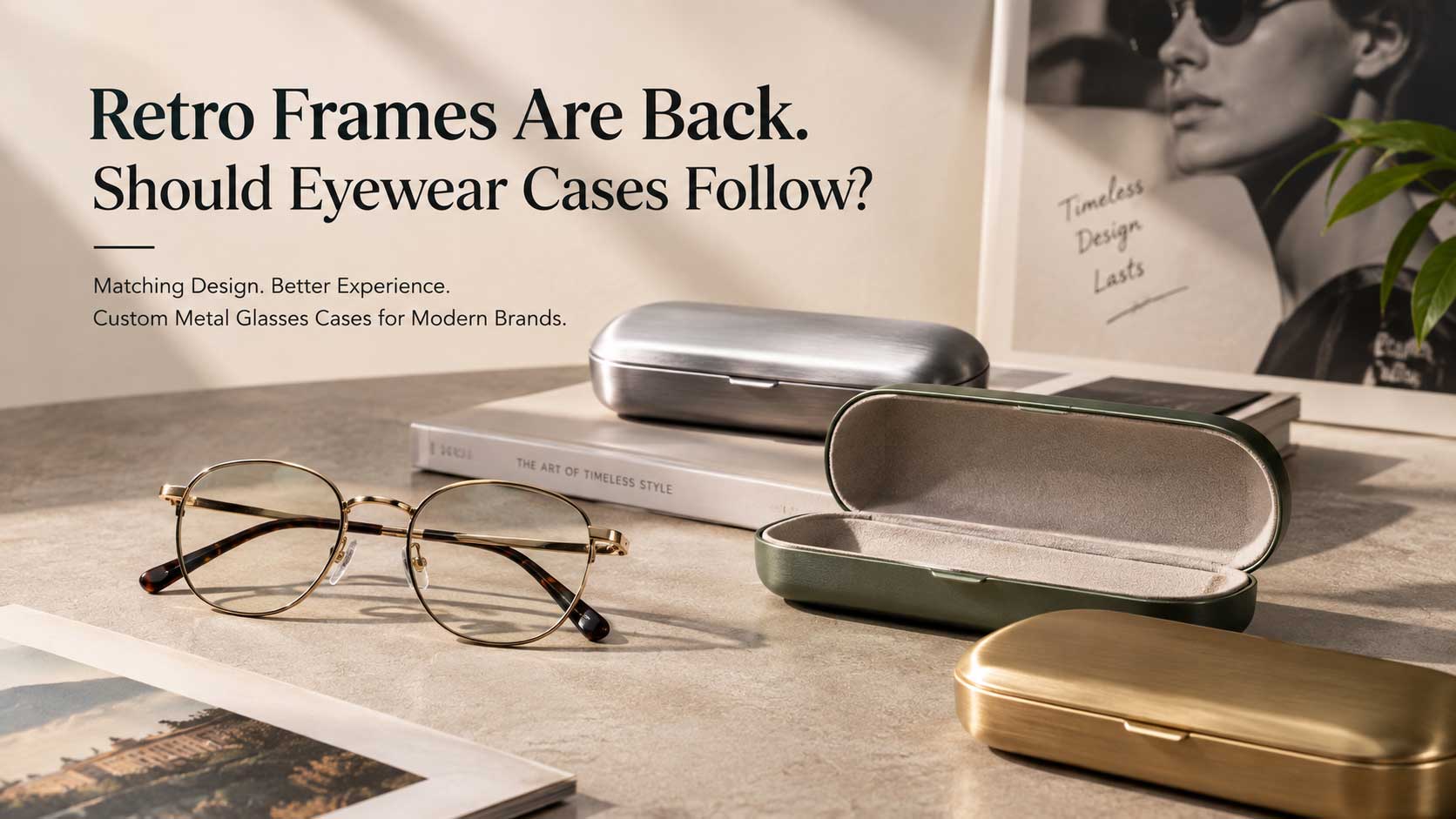
Packaging Should Match the Frame
A minimalist metal frame can communicate precision, lightness and timeless design. A generic case may not deliver the same impression.
A custom metal glasses case gives eyewear brands another opportunity to extend the design language of the collection.
Brands can develop cases around:
- Classic or contemporary shapes
- Metallic finishes and colors
- Custom logos and surface details
- Different interior materials
- Frame-specific dimensions
- Coordinated packaging collections
The goal is not to make the case more complicated. It is to make the entire product experience feel more intentional.
From Protection to Design Continuity
For B2B eyewear brands, packaging is increasingly connected to product positioning.
A retro-inspired collection, for example, may benefit from a case with structured construction and understated detailing. A contemporary metal-frame collection may call for a cleaner profile and more minimal branding.
This creates a stronger connection between the frame, case and overall brand identity.
A Practical Option for Premium Collections
Metal glasses cases can work across optical frames, sunglasses, limited-edition collections and premium private-label products.
For OEM buyers, the case can also be customized according to frame size, target market, branding requirements and retail positioning.
Instead of treating the case as a standard accessory, brands can develop it as part of the product architecture.
When the Case Becomes Part of the Collection
As eyewear continues to combine fashion, identity and functionality, packaging has an opportunity to follow the same direction.
For brands developing retro-inspired or refined metal-frame collections, a custom metal glasses case can help create a more consistent product experience—from the frame customers see first to the accessory they keep after purchase.